Author: 2026GPKDMP

  • 5 Digital Marketing Mistakes Killing Your Business (And How to Fix Them Today)

    5 Digital Marketing Mistakes Killing Your Business (And How to Fix Them Today)

    READER NOTE: This article is a fully worked example for the Digital Marketing Simulation of a good blog post. It demonstrates blog post structure, tone, visual placement, and CTA before they write their own posts.

    📌  HEADLINE: Make it 6–12 words, or roughly 50–60 characters (including spaces).

    5 Digital Marketing Mistakes Killing Your Business (And How to Fix Them Today)

    📝  INTRO-Opens with a relatable scenario, then explains what the reader will learn. No paragraph exceeds 150 words.

    You’ve set up your website, you’re posting on social media, and you’ve even tried running a few ads. But somehow, the results just aren’t showing up. Sound familiar?

    The truth is, most small business owners and new marketers don’t fail because they lack effort – they fail because they’re making a handful of avoidable digital marketing mistakes that quietly drain their budget and kill their growth.

    In this post, we’re breaking down the five most common digital marketing mistakes and showing you exactly what to do instead. Whether you’re just starting out or looking to level up, these fixes are practical, low-cost, and effective.

    🏷️  SUBHEADER

    Mistake #1: Talking to Everyone (And Reaching No One)

    🖼️  VISUAL ASSET

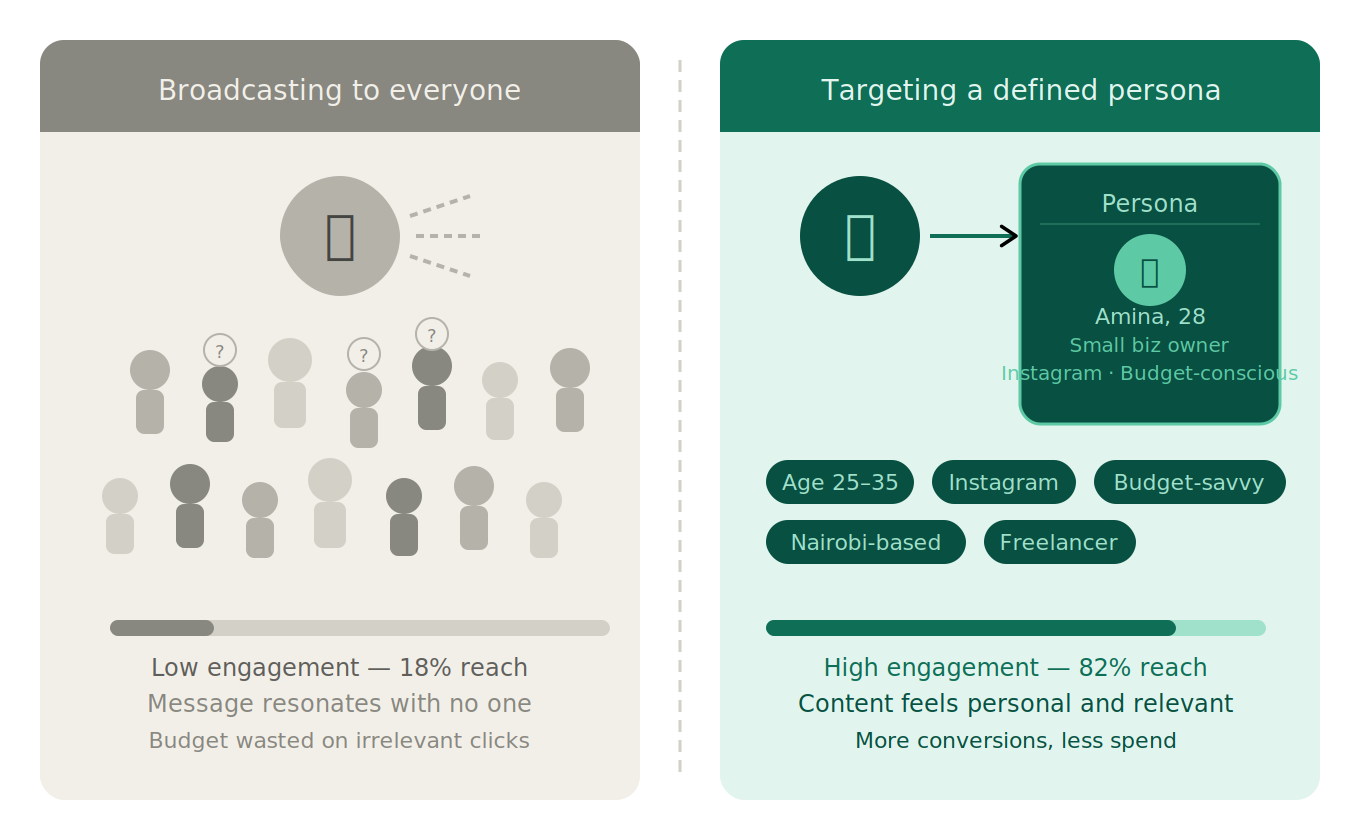
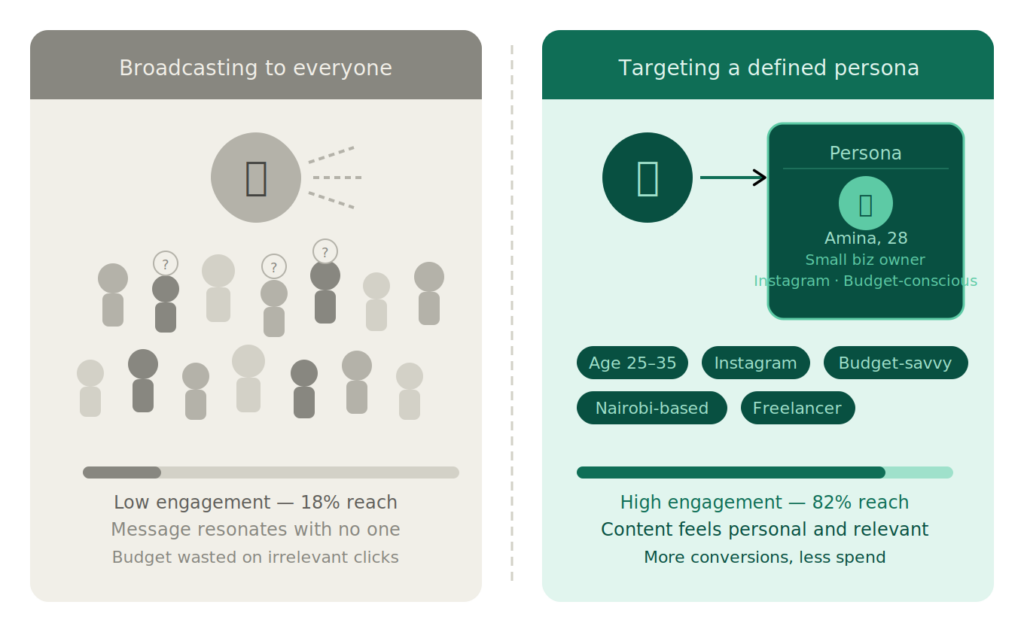
    [ INSERT IMAGE: A broad crowd vs a clearly defined niche audience — e.g. a marketer pointing at a specific customer persona]

    Image caption: Narrowing your audience focus leads to stronger engagement and better results.

    Audience focus
    Broad audience vs specific audience

    đź“„  MAIN COPY

    One of the biggest digital marketing mistakes is trying to market to everyone. When your message is for everybody, it resonates with nobody. If your ad says ‘great for all ages and all budgets,’ it sounds like a generic flyer – forgettable and unconvincing.

    The fix is simple: define your target audience with a detailed persona. Ask yourself:

    • How old are they? Where do they live?
    • What problem are they trying to solve?
    • What platforms do they spend their time on?
    • What language and tone do they respond to?

    Once you know who you’re speaking to, every piece of content you create — from blog posts to Instagram captions — becomes sharper, more relatable, and more likely to convert.

    Mistake #2: Ignoring SEO Until It’s Too Late

    A lot of businesses build a beautiful website, post amazing content, and then wonder why nobody visits. The answer is almost always Search Engine Optimisation (SEO) – or the lack of it.

    SEO is how search engines like Google decide where your content appears in search results. Without it, your site is essentially invisible. The good news? You don’t need to be a tech expert to get started.

    Here are three SEO basics you can implement today:

    • Use keywords naturally: Research what your audience is searching for and include those terms in your headlines, body copy, and image alt text.
    • Write descriptive page titles and meta descriptions: These are what users see on Google before clicking – make them compelling.
    • Link to credible sources: External links to authoritative sites (like Google’s own guides) signal credibility to search engines.

    Good news is that Google guides you as a beginner on how to optimize your website on Google Starter Guide

    Mistake #3: Posting Without a Strategy

    Random posting – a photo one day, a promotion the next, then silence for two weeks – is one of the most common mistakes new marketers make. Social media algorithms reward consistency, and audiences lose interest when there’s no clear theme or schedule.

    A content strategy doesn’t have to be complicated. At minimum, you need:

    • A clear content theme (what topics will you focus on?)
    • A posting schedule (how often will you publish, and on which platforms?)
    • A call to action in every post (what do you want your audience to do next?)

    Think of your content strategy like a fitness plan. Showing up once a month and going hard won’t get you results. Consistent, intentional effort over time does.

    Mistake #4: Neglecting Mobile Users

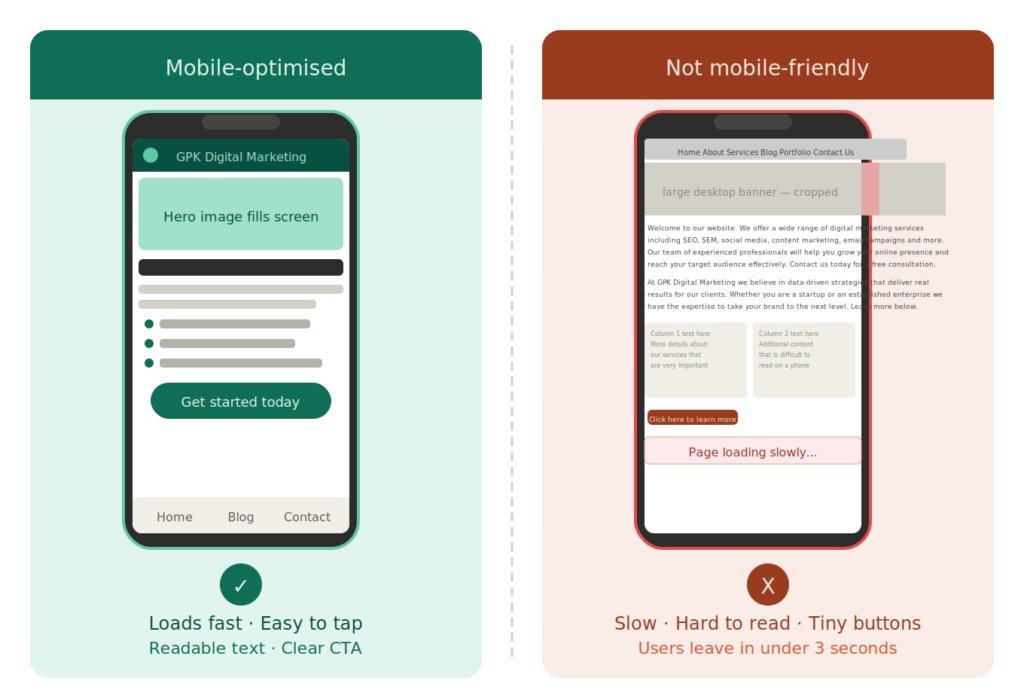
    [ INSERT IMAGE: Side-by-side comparison of a mobile-optimised vs a poorly formatted website on a smartphone screen ]

    Image caption: Over 60% of web traffic now comes from mobile devices — design for the phone first.

    a mobile-optimised vs a poorly formatted website on a smartphone screen
    a mobile-optimised vs a poorly formatted website on a smartphone screen

    More than half of all internet traffic comes from mobile devices – and that number keeps growing. If your website isn’t mobile-friendly, you’re losing customers before they even read your first sentence.

    Test your site right now: open it on your phone. Does it load fast? Are the buttons easy to tap? Is the text readable without zooming in? If not, here’s what to prioritise:

    • Use a responsive design (most modern website builders do this automatically)
    • Keep paragraphs short and well-spaced – walls of text are unreadable on small screens
    • Compress images so pages load quickly – slow sites get abandoned within seconds

    Mistake #5: Skipping the Follow-Up

    Most customers don’t buy the first time they encounter a brand. Studies suggest it takes between 5 and 8 touchpoints before someone makes a purchase decision. Yet many businesses put all their energy into attracting new visitors and nothing into following up with people who already showed interest.

    Email marketing is one of the most cost-effective follow-up tools available. A well-timed email to someone who signed up for your newsletter or downloaded a free resource can be the nudge they need to become a paying customer.

    Don’t neglect retargeting ads either – these are ads that specifically show up for people who have already visited your website. Since they already know you exist, they’re far more likely to convert.

    THE CONCLUSION & CALL TO ACTION

    Stop Making These Mistakes — Start Growing Today

    Digital marketing doesn’t have to feel overwhelming. By fixing just one of these five mistakes, you can start seeing real improvements in your traffic, engagement, and conversions.

    To recap, the five mistakes to stop making are:

    • Marketing to everyone instead of a defined target audience
    • Ignoring SEO basics that help people find you on Google
    • Posting without a content strategy or consistent schedule
    • Ignoring how your site looks and functions on mobile devices
    • Failing to follow up with leads through email or retargeting

    Ready to level up your digital marketing? Download our free Content Strategy Checklist and start building a plan that actually works. No fluff, just actionable steps.

    ➡  Get the Free Checklist →

    Have a question or want to share which mistake you’ve been making? Drop it in the comments below – we read every one.

  • How to do Keyword Research in 2026

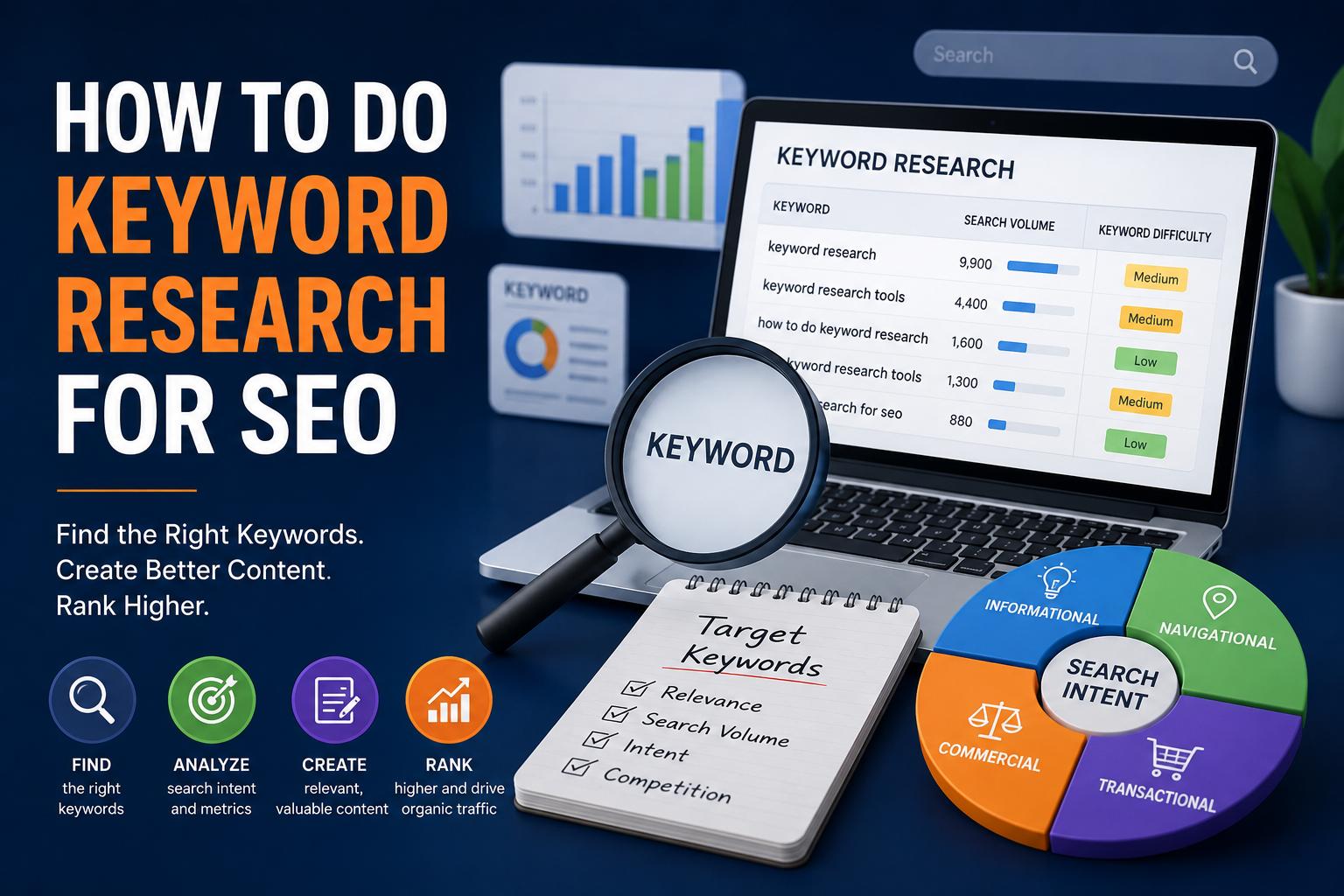
    How to do Keyword Research in 2026

    Keyword Research in 2026 Is No Longer Just About Search Volume

    SEO has changed dramatically. Today, ranking on Google is only part of the game. Your content also needs to earn visibility inside:

    • Google AI Overviews
    • ChatGPT answers
    • Perplexity AI
    • Voice search
    • AI-powered search experiences

    That means keyword research is evolving too. Here’s what smart marketers are focusing on in 2026:

    Search Intent Over Traffic

    A high-volume keyword means nothing if it doesn’t match what users actually want. Understanding intent is now the foundation of SEO success.

    Long-Tail Keywords Are Winning

    Specific, conversational search phrases are becoming more valuable because they mirror how people talk to AI tools and voice assistants.

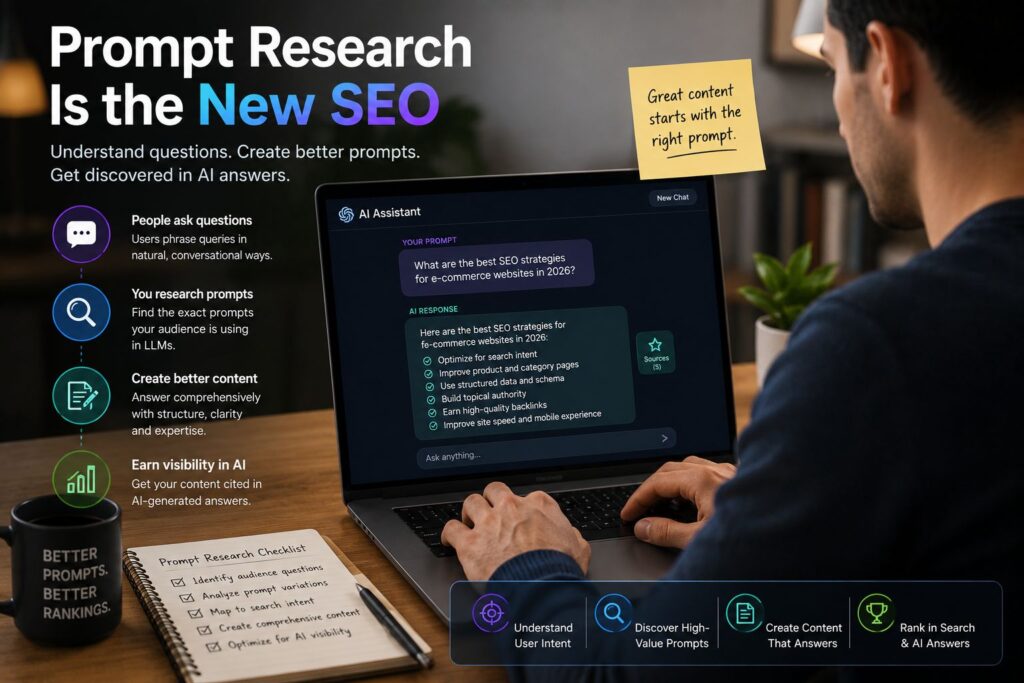
    Prompt Research Is the New SEO Skill

    People no longer search with only short phrases like:
    “email marketing tools”

    Now they ask:
    “What’s the best email marketing tool for a small business using Shopify?”

    That shift changes how content should be created and optimized.

    Topical Authority Matters More Than Ever

    Google increasingly rewards websites that deeply cover a topic instead of publishing random disconnected articles.

    AI Overviews Are Reducing Clicks

    Even when rankings stay stable, AI-generated summaries can reduce traffic significantly. Visibility now matters beyond traditional rankings.

    SEO and AI Optimization Work Together

    The same things that help you rank in Google also help AI systems trust and cite your content:

    • Helpful content
    • Strong E-E-A-T signals
    • Clear structure
    • Relevant backlinks
    • Semantic depth

    The biggest takeaway?

    Keyword research is no longer just about finding keywords.

    It’s about understanding how humans ask questions — and how AI interprets those questions.

    The future belongs to brands creating content that answers real problems clearly, naturally, and comprehensively.

  • SEO in 2026 Is Bigger Than Just Google Rankings 🚀

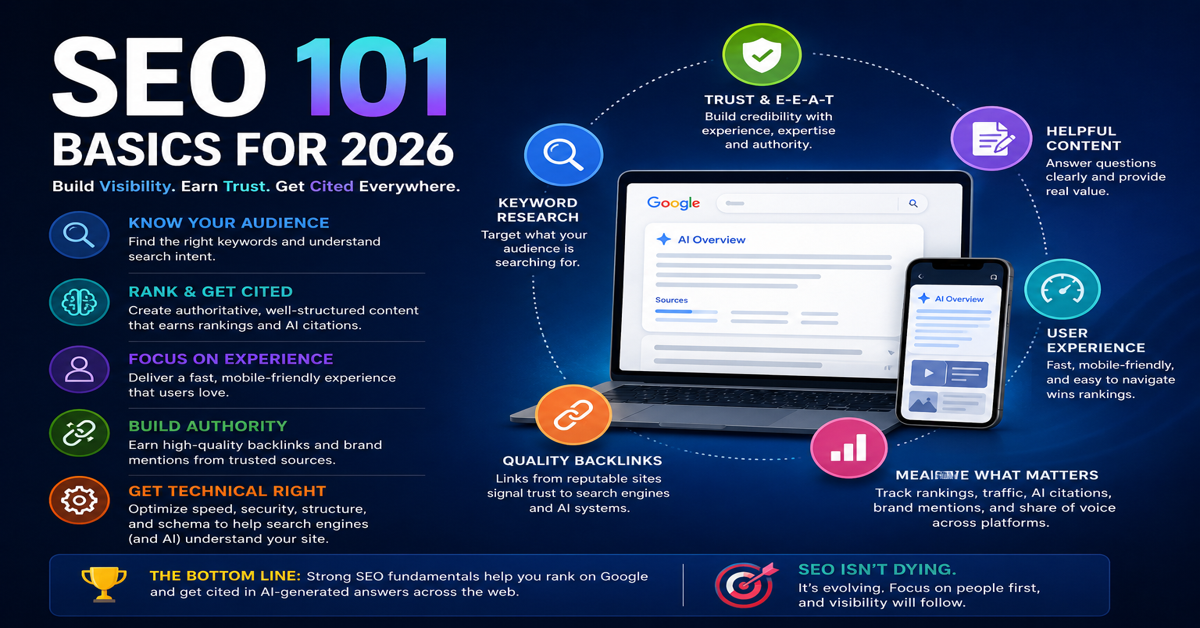
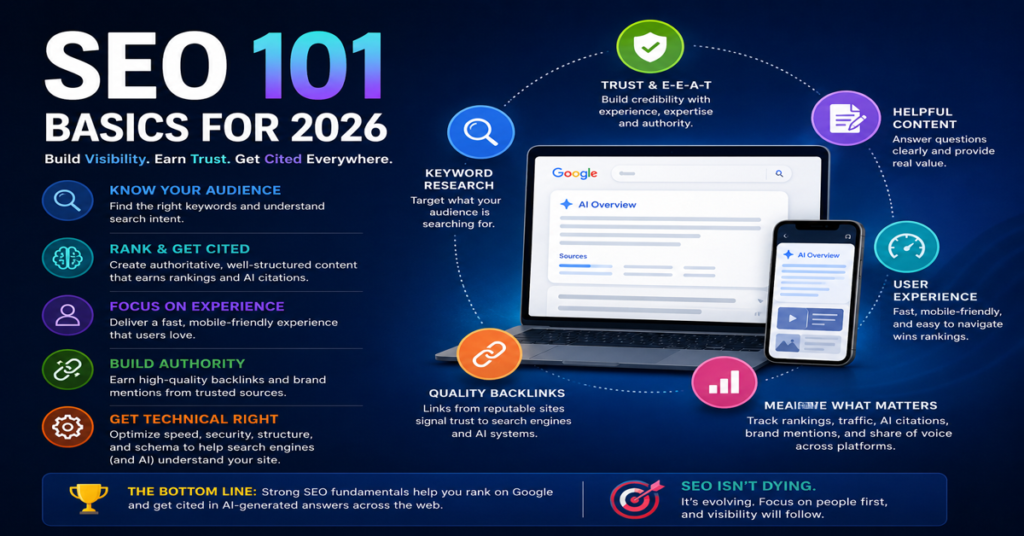
    SEO in 2026 Is Bigger Than Just Google Rankings 🚀

    How has Google Rankings Changed SEO in 2026

    SEO is no longer only about appearing on page one of Google.

    • Today, strong SEO also determines whether your brand gets cited in:
    • Google AI Overviews
    • ChatGPT answers
    • TikTok search
    • YouTube recommendations
    • AI-powered search experiences

    The fundamentals haven’t changed – but the battlefield has.

    Here’s what modern SEO success now looks like:

    1. Keyword Research Still Matters

    Understanding what your audience is searching for remains the foundation of visibility. But today, intent matters more than keyword volume alone.

    2. AI Visibility Is the New SEO Layer

    Well-structured, authoritative content is more likely to appear inside AI-generated answers and summaries.

    3. User Experience Directly Impacts Rankings

    A slow, cluttered, or mobile-unfriendly website can hurt your visibility fast. Google rewards websites that users enjoy navigating.

    4. Helpful Content Wins

    Content built around genuine expertise, experience, and trust continues to outperform keyword-stuffed articles.

    5. Quality Backlinks Build Authority

    Mentions and links from credible websites still act as trust signals for both search engines and AI systems.

    6. Technical SEO Is Non-Negotiable

    Fast loading speed, mobile optimization, HTTPS security, and structured site architecture remain critical.

    6. SEO Is Now About Visibility Everywhere

    Brands need to measure not only rankings and traffic, but also AI citations, brand mentions, and share of voice across digital platforms.

    The biggest takeaway?

    1. SEO is evolving – not dying. The brands that will dominate the future are the ones creating trustworthy, well-structured, audience-focused content that serves people first and algorithms second.
    2. In 2026, SEO is no longer just search engine optimization. It’s digital visibility optimization.
  • Google’s Algorithm Has Changed Again — And SEO Will Never Be the Same

    Google’s Algorithm Has Changed Again — And SEO Will Never Be the Same

    Google’s latest updates are sending a clear message: rankings are no longer just about keywords and backlinks.

    The 2024 API leak revealed something many marketers suspected for years:
    👉 User behavior matters more than Google publicly admitted.

    Clicks, engagement, dwell time, and brand trust are now playing a major role in search visibility.

    Here are some of the biggest shifts shaping SEO in 2026:

    Evolved Google Algorithm
    • AI Overviews are changing how content appears in search
      AI-generated answers now appear in a huge percentage of searches, meaning content must be structured clearly and answer questions directly to earn visibility.
    • Brand authority is becoming a ranking advantage
      Google increasingly favors trusted brands, official sources, and websites with strong topical authority.
    • Low-quality content is being filtered out faster
      Recent core updates have aggressively targeted thin, mass-produced, and manipulative content strategies.
    • E-E-A-T matters more than ever
      Experience, Expertise, Authoritativeness, and Trustworthiness are no longer optional — they’re foundational.
    • User experience is a ranking signal
      Fast-loading, mobile-friendly websites with strong engagement metrics continue to outperform competitors.

    The biggest lesson?

    SEO is no longer about gaming the algorithm.
    It’s about creating genuinely valuable content that people trust, engage with, and return to.

    Businesses that focus on quality, credibility, and real audience value will continue to win in the AI-powered search era.

  • How to Monetize a Blog

    How to Monetize a Blog

    7 Proven Strategies of Monetizing a Blog

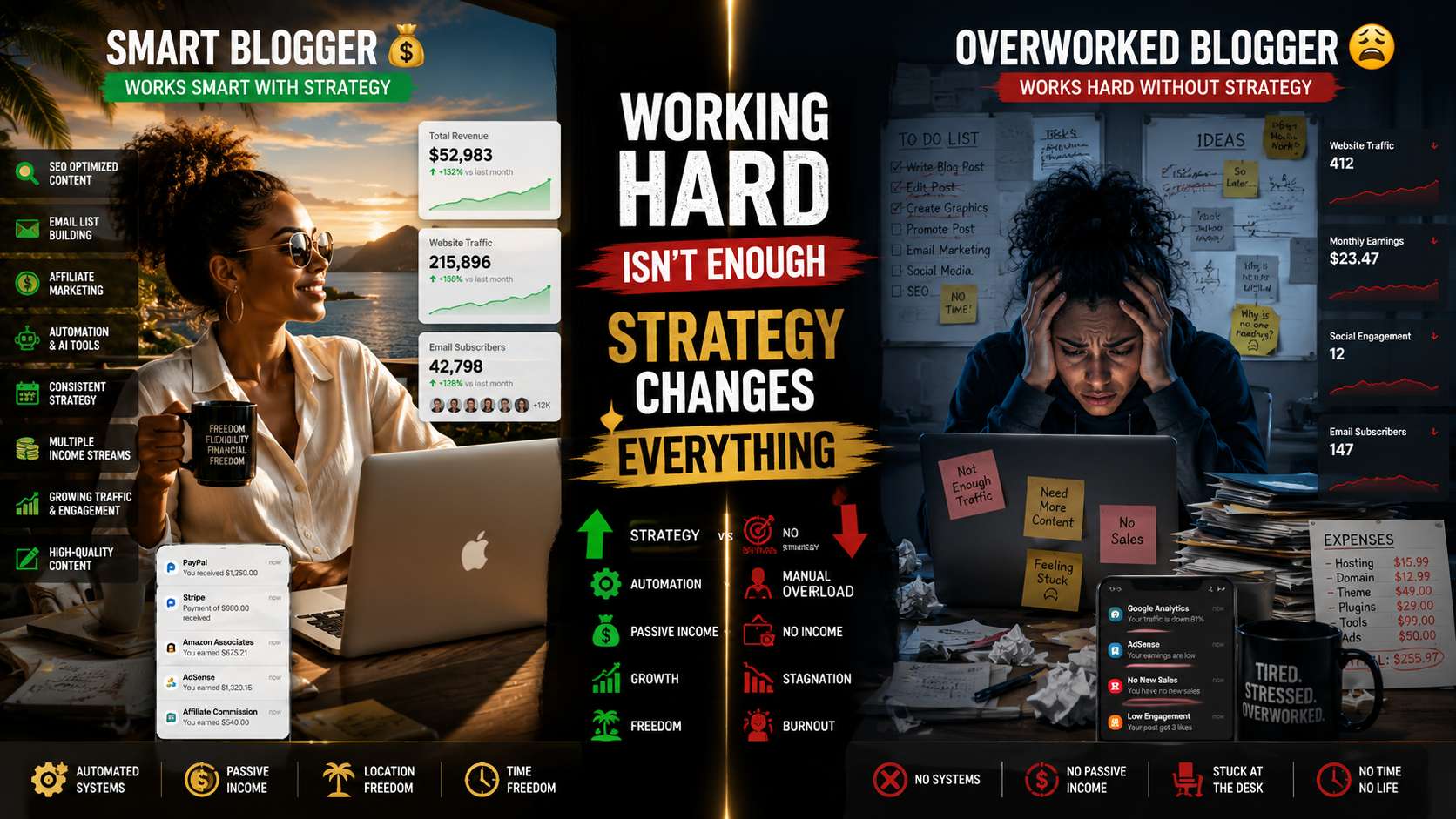
    You have been writing consistently. Your traffic is growing. People are sharing your posts and your email list is slowly building up. You are doing everything right. And yet, your bank account looks exactly the same as it did when you started.

    Sound familiar? You are not alone. Thousands of bloggers get stuck at exactly this point. They have the content and the audience, but they have not yet figured out how to turn those things into income.

    make money blogs

    The good news is that monetizing a blog is not a mystery. It is a set of learnable, repeatable strategies that work across every niche — from personal finance to food to digital marketing. In this post, we are going to walk through seven of the most effective ways to make money from your blog, who each strategy works best for, and how to get started.

    Whether you are still setting up your foundation or already have an established audience, this guide will help you find the right path. If you are brand new to blogging altogether, we recommend starting with Neil Patel’s comprehensive beginner guide to starting a blog before diving into monetization — the strategies below work best once you have the fundamentals in place.

    What Does It Mean to Monetize a Blog?


    Monetization simply means converting your blog content into a source of income. Every visit to your blog is a potential revenue opportunity — the key is choosing the right method to unlock it.
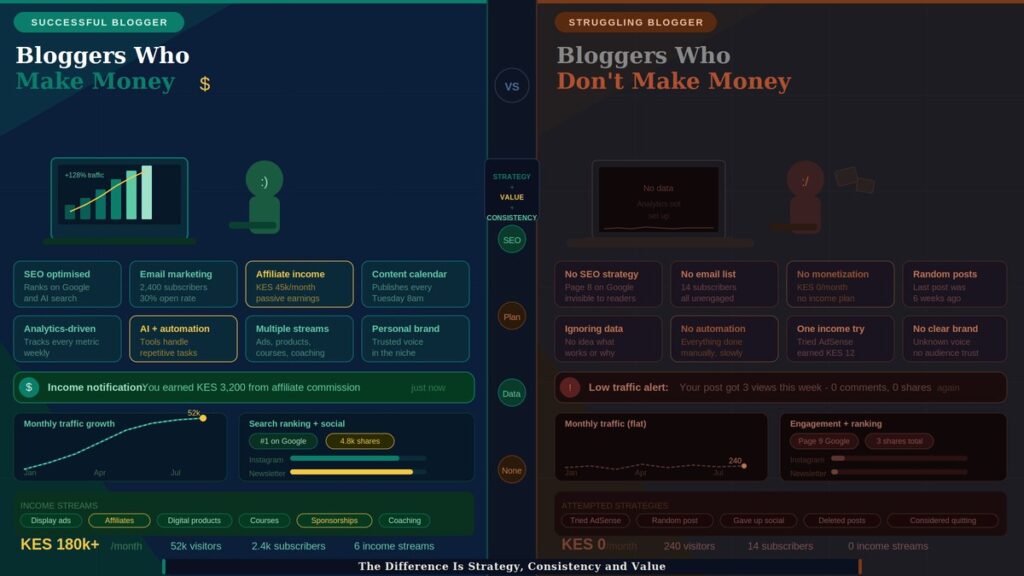
    There is no single right way. The best monetization strategy depends on your niche, your audience size, your content format, and how much time you are willing to invest. Most successful bloggers use two or three methods simultaneously, creating multiple income streams that complement each other.


    Key principle: Traffic without strategy = zero income. Strategy without traffic = zero income. You need both. Build your audience and your monetization approach at the same time.

    Strategy 1: Display Advertising

    Display advertising is the most accessible starting point for most bloggers. You place ads on your blog, and you earn money when visitors view or click those ads. Simple in concept, but there are important nuances.

    How it works

    You sign up with an ad network, place a small snippet of code on your blog, and the network automatically serves relevant ads to your readers. The most well-known network is Google AdSense, which pays you every time a visitor views or clicks an ad on your page.

    According to Google, AdSense works by serving ads that are contextually relevant to your content — so if your blog is about digital marketing, your readers will see ads for marketing tools, courses, and services. This relevance increases click-through rates and, therefore, your earnings.

    What you need to get started

    • A self-hosted blog (WordPress.org, not WordPress.com)
    • At least 20–30 published, high-quality posts
    • Consistent organic traffic (aim for at least 1,000 monthly visitors before applying to AdSense)
    • Content that complies with Google’s publisher policies

    Earnings note:  Display advertising pays modest amounts at low traffic volumes. At 10,000 monthly page views, expect KES 5,000–15,000/month depending on your niche and audience geography. It scales as your traffic grows.

    Strategy 2: Affiliate Marketing

    Affiliate marketing is one of the highest-earning monetization strategies available to bloggers — and unlike ads, it does not require high traffic volumes to be effective. You earn a commission every time a reader clicks your unique referral link and makes a purchase.

    How it works

    You join an affiliate programme for a product or service relevant to your blog. The company gives you a unique tracking link. You include that link naturally in your content — in product reviews, resource lists, how-to guides, or comparisons — and you earn a percentage of any resulting sales.

    Best affiliate programmes for digital marketing bloggers

    • Semrush: Up to $200 per referral for one of the leading SEO and content marketing platforms
    • Bluehost / Hostinger: KES 3,000–5,000+ per referral for web hosting plans. Perfect for a blog about starting a business or building an online presence
    • Mailchimp / ConvertKit: Recurring commissions for email marketing tools — a great fit for a digital marketing audience
    • Amazon Associates: Lower commission rates (1–10%) but incredibly broad product range. Works well for book recommendations and physical product reviews

    Pro tip:  The most effective affiliate content is honest and specific. A post titled “I Used Semrush for 90 Days — Here’s What Happened” converts far better than a generic “Best SEO Tools” roundup.

    Strategy 3: Sponsored Posts and Brand Partnerships

    Once your blog has a defined audience and consistent traffic, brands will pay you to create content that features or reviews their products. This can range from a single sponsored article to an ongoing brand ambassadorship.

    Sponsored post rates vary enormously. A micro-blogger in a specific niche can command KES 15,000–50,000 per post. A well-established blog with 50,000+ monthly readers can charge several hundred thousand shillings per campaign.

    How to attract sponsors without waiting to be discovered

    • Create a media kit: a one-page document showing your traffic stats, audience demographics, social following, and past partnerships
    • Pitch brands directly via email. Don’t wait to be discovered — identify five brands whose products you genuinely use and send a tailored proposal
    • List your blog on influencer marketplaces like Influence.co, AspireIQ, or local platforms like Soko Yetu
    • Write high-quality organic reviews of products before any deal — this signals to brands what a sponsored post would look like

    Transparency:  Always disclose sponsored content clearly to your readers. In Kenya, the Advertising Standards Code requires clear disclosure. A simple “This post is sponsored by [Brand]” at the top is sufficient and builds reader trust.

    Strategy 4: Sell Digital Products

    Selling your own digital products is where blogging income can genuinely become transformative. There are no commissions to pay, no minimum traffic thresholds, and the products can keep selling while you sleep.

    For a digital marketing blog, the most natural digital products are things your audience already needs: templates, checklists, e-books, mini-courses, and toolkits.

    Digital product ideas for digital marketing bloggers

    • Content strategy template bundle (Notion or Google Sheets)
    • Social media caption writing guide for Kenyan SMEs
    • 30-day Instagram growth challenge workbook
    • SEO audit checklist for small business websites
    • Email marketing swipe file: 20 done-for-you campaign templates
    • Mini e-book: “How to Build a Personal Brand in Kenya from Zero”

    You can sell digital products directly from your blog using tools like Gumroad, Payhip, or WooCommerce — all of which accept M-Pesa payments, making them accessible to a Kenyan audience without requiring a credit card.

    Pricing insight:  Start lower than you think (KES 500–1,500 for your first product). Collect reviews and testimonials. Then raise the price as social proof builds. A product with 50 reviews at KES 800 will outsell a new product at KES 200.

    Strategy 5: Online Courses and Coaching

    If your blog has established you as a credible voice in your niche, the natural next step is to teach what you know — either through a structured online course or one-on-one coaching.

    This is the strategy with the highest income ceiling. A single online course can sell indefinitely. A coaching package for a business client can command KES 20,000–100,000 per month. The upfront investment is significant, but the return can be dramatic.

    Platforms to host your course

    • Teachable: Easy to set up, good for beginners, accepts international payments
    • Thinkific: Free plan available, robust features, no transaction fees on paid plans
    • Udemy: Existing marketplace means organic discovery, but you have less pricing control
    • Your own WordPress site: Using LearnDash or LifterLMS plugins, you keep 100% of revenue

    Start small:  Before building a full course, offer a paid 1-hour workshop via Zoom. Charge KES 1,000–2,000. Get 10 people. Use their questions to build the curriculum for your full course. Validation before creation.

    Strategy 6: Email List and Subscription Revenue

    Your email list is the most valuable asset your blog owns. Unlike social media followers, your email subscribers belong to you. An algorithm change on Instagram cannot take them away. That makes an email list both a revenue channel and an insurance policy.

    Subscription-based monetization means charging readers for premium content, an exclusive newsletter, early access to resources, or a private community. Platforms like Substack, Patreon, and Ghost allow bloggers to charge monthly subscriptions starting from as little as KES 200/month.

    How to build a list worth monetising

    • Create a high-value free lead magnet (a checklist, template, or mini guide) and gate it behind an opt-in form
    • Email your list consistently — at least once a week — with genuinely useful content, not just promotions
    • Segment your list based on interests so you can send targeted offers
    • Introduce a paid tier only after establishing consistent free value. Your free subscribers need to trust you before they pay you

    For a more detailed breakdown of the different revenue models available to bloggers — including subscriptions, ad revenue, and product sales — the team at HostAfrica has published a practical guide on blog monetization strategies that is worth bookmarking as a reference as your blog grows.

    Strategy 7: Freelance Services and Consultancy

    This strategy does not get talked about enough. For many bloggers, especially those in professional niches like digital marketing, finance, or law, the blog itself is not the product — it is the portfolio. The blog demonstrates expertise, and readers become clients.

    If you run a digital marketing blog, every post you publish is a live demonstration of your content writing, SEO, and audience-building skills. You do not need to pitch. You just need to make it easy for people to hire you.

    What to offer as a blog-driven freelancer

    • Content writing and blog management for other businesses
    • Social media strategy and content creation
    • SEO audits and implementation
    • Digital marketing consultancy for SMEs
    • Workshop facilitation and corporate training

    Add a clear “Work With Me” or “Hire Me” page to your blog. List exactly what you offer, who you work with, and how to get in touch. Rates are optional — some consultants list them, others prefer to discuss on enquiry. Both approaches work.

    Which Strategy Should You Start With?

    The honest answer is: it depends on where you are right now. Here is a practical framework:

    Choose your starting point based on your stage

    1. New blog (0–3 months): Focus on content quality and SEO. Begin affiliate marketing early — it does not require high traffic to start.
    2. Growing blog (3–12 months): Add display advertising once you hit 1,000+ monthly visitors. Start building your email list. Create your first digital product.
    3. Established blog (1 year+): Pursue brand partnerships, launch a course, and consider a paid subscription tier. By now, your content reputation does the selling.

    Start Earning Before You Feel Ready

    Here is the mindset shift that separates bloggers who make money from those who do not: you do not need a perfect strategy or a massive audience to start monetizing. You need to begin.

    Pick one strategy from this list that fits where you are right now. Not three. One. Commit to it for 90 days. Track your results. Adjust. Then add a second income stream.

    The bloggers generating consistent income from their content are not smarter or more talented. They are simply the ones who started implementing before they felt completely ready.

    Ready to build a blog that actually makes money? Start with a content strategy that works. Download our free Content Strategy Checklist below and map out your first 90 days.

    ➡  Download the Free Content Strategy Checklist →

    Have a question about monetizing your blog? Drop it in the comments — we answer every single one.