
7 Proven Strategies of Monetizing a Blog
You have been writing consistently. Your traffic is growing. People are sharing your posts and your email list is slowly building up. You are doing everything right. And yet, your bank account looks exactly the same as it did when you started.
Sound familiar? You are not alone. Thousands of bloggers get stuck at exactly this point. They have the content and the audience, but they have not yet figured out how to turn those things into income.
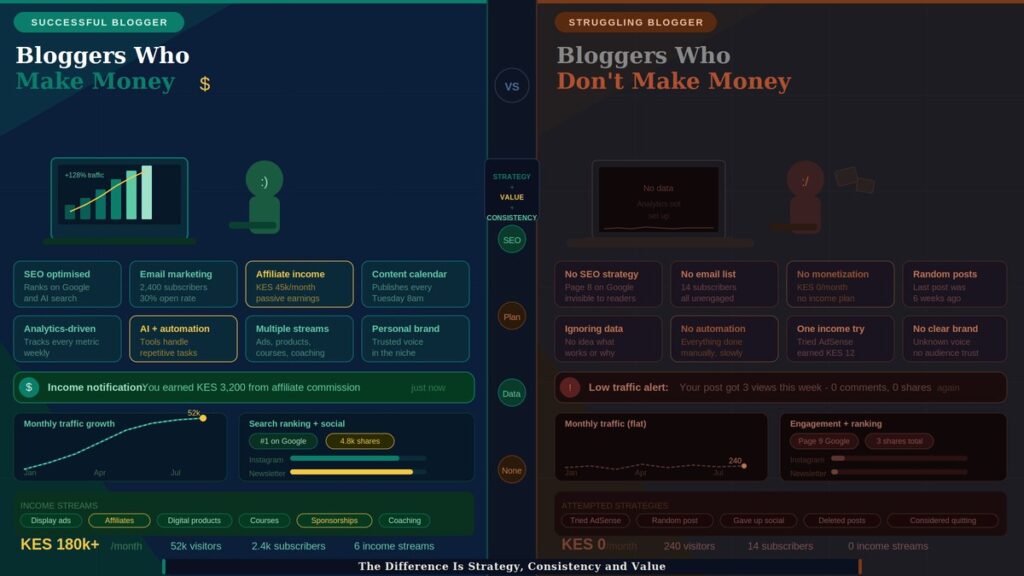
The good news is that monetizing a blog is not a mystery. It is a set of learnable, repeatable strategies that work across every niche — from personal finance to food to digital marketing. In this post, we are going to walk through seven of the most effective ways to make money from your blog, who each strategy works best for, and how to get started.
Whether you are still setting up your foundation or already have an established audience, this guide will help you find the right path. If you are brand new to blogging altogether, we recommend starting with Neil Patel’s comprehensive beginner guide to starting a blog before diving into monetization — the strategies below work best once you have the fundamentals in place.
What Does It Mean to Monetize a Blog?
Monetization simply means converting your blog content into a source of income. Every visit to your blog is a potential revenue opportunity — the key is choosing the right method to unlock it.
There is no single right way. The best monetization strategy depends on your niche, your audience size, your content format, and how much time you are willing to invest. Most successful bloggers use two or three methods simultaneously, creating multiple income streams that complement each other.
Key principle: Traffic without strategy = zero income. Strategy without traffic = zero income. You need both. Build your audience and your monetization approach at the same time.
Strategy 1: Display Advertising
Display advertising is the most accessible starting point for most bloggers. You place ads on your blog, and you earn money when visitors view or click those ads. Simple in concept, but there are important nuances.
How it works
You sign up with an ad network, place a small snippet of code on your blog, and the network automatically serves relevant ads to your readers. The most well-known network is Google AdSense, which pays you every time a visitor views or clicks an ad on your page.
According to Google, AdSense works by serving ads that are contextually relevant to your content — so if your blog is about digital marketing, your readers will see ads for marketing tools, courses, and services. This relevance increases click-through rates and, therefore, your earnings.
What you need to get started
- A self-hosted blog (WordPress.org, not WordPress.com)
- At least 20–30 published, high-quality posts
- Consistent organic traffic (aim for at least 1,000 monthly visitors before applying to AdSense)
- Content that complies with Google’s publisher policies
Earnings note: Display advertising pays modest amounts at low traffic volumes. At 10,000 monthly page views, expect KES 5,000–15,000/month depending on your niche and audience geography. It scales as your traffic grows.
Strategy 2: Affiliate Marketing
Affiliate marketing is one of the highest-earning monetization strategies available to bloggers — and unlike ads, it does not require high traffic volumes to be effective. You earn a commission every time a reader clicks your unique referral link and makes a purchase.
How it works
You join an affiliate programme for a product or service relevant to your blog. The company gives you a unique tracking link. You include that link naturally in your content — in product reviews, resource lists, how-to guides, or comparisons — and you earn a percentage of any resulting sales.
Best affiliate programmes for digital marketing bloggers
- Semrush: Up to $200 per referral for one of the leading SEO and content marketing platforms
- Bluehost / Hostinger: KES 3,000–5,000+ per referral for web hosting plans. Perfect for a blog about starting a business or building an online presence
- Mailchimp / ConvertKit: Recurring commissions for email marketing tools — a great fit for a digital marketing audience
- Amazon Associates: Lower commission rates (1–10%) but incredibly broad product range. Works well for book recommendations and physical product reviews
Pro tip: The most effective affiliate content is honest and specific. A post titled “I Used Semrush for 90 Days — Here’s What Happened” converts far better than a generic “Best SEO Tools” roundup.
Strategy 3: Sponsored Posts and Brand Partnerships
Once your blog has a defined audience and consistent traffic, brands will pay you to create content that features or reviews their products. This can range from a single sponsored article to an ongoing brand ambassadorship.
Sponsored post rates vary enormously. A micro-blogger in a specific niche can command KES 15,000–50,000 per post. A well-established blog with 50,000+ monthly readers can charge several hundred thousand shillings per campaign.
How to attract sponsors without waiting to be discovered
- Create a media kit: a one-page document showing your traffic stats, audience demographics, social following, and past partnerships
- Pitch brands directly via email. Don’t wait to be discovered — identify five brands whose products you genuinely use and send a tailored proposal
- List your blog on influencer marketplaces like Influence.co, AspireIQ, or local platforms like Soko Yetu
- Write high-quality organic reviews of products before any deal — this signals to brands what a sponsored post would look like
Transparency: Always disclose sponsored content clearly to your readers. In Kenya, the Advertising Standards Code requires clear disclosure. A simple “This post is sponsored by [Brand]” at the top is sufficient and builds reader trust.
Strategy 4: Sell Digital Products
Selling your own digital products is where blogging income can genuinely become transformative. There are no commissions to pay, no minimum traffic thresholds, and the products can keep selling while you sleep.
For a digital marketing blog, the most natural digital products are things your audience already needs: templates, checklists, e-books, mini-courses, and toolkits.
Digital product ideas for digital marketing bloggers
- Content strategy template bundle (Notion or Google Sheets)
- Social media caption writing guide for Kenyan SMEs
- 30-day Instagram growth challenge workbook
- SEO audit checklist for small business websites
- Email marketing swipe file: 20 done-for-you campaign templates
- Mini e-book: “How to Build a Personal Brand in Kenya from Zero”
You can sell digital products directly from your blog using tools like Gumroad, Payhip, or WooCommerce — all of which accept M-Pesa payments, making them accessible to a Kenyan audience without requiring a credit card.
Pricing insight: Start lower than you think (KES 500–1,500 for your first product). Collect reviews and testimonials. Then raise the price as social proof builds. A product with 50 reviews at KES 800 will outsell a new product at KES 200.
Strategy 5: Online Courses and Coaching
If your blog has established you as a credible voice in your niche, the natural next step is to teach what you know — either through a structured online course or one-on-one coaching.
This is the strategy with the highest income ceiling. A single online course can sell indefinitely. A coaching package for a business client can command KES 20,000–100,000 per month. The upfront investment is significant, but the return can be dramatic.
Platforms to host your course
- Teachable: Easy to set up, good for beginners, accepts international payments
- Thinkific: Free plan available, robust features, no transaction fees on paid plans
- Udemy: Existing marketplace means organic discovery, but you have less pricing control
- Your own WordPress site: Using LearnDash or LifterLMS plugins, you keep 100% of revenue
Start small: Before building a full course, offer a paid 1-hour workshop via Zoom. Charge KES 1,000–2,000. Get 10 people. Use their questions to build the curriculum for your full course. Validation before creation.
Strategy 6: Email List and Subscription Revenue
Your email list is the most valuable asset your blog owns. Unlike social media followers, your email subscribers belong to you. An algorithm change on Instagram cannot take them away. That makes an email list both a revenue channel and an insurance policy.
Subscription-based monetization means charging readers for premium content, an exclusive newsletter, early access to resources, or a private community. Platforms like Substack, Patreon, and Ghost allow bloggers to charge monthly subscriptions starting from as little as KES 200/month.
How to build a list worth monetising
- Create a high-value free lead magnet (a checklist, template, or mini guide) and gate it behind an opt-in form
- Email your list consistently — at least once a week — with genuinely useful content, not just promotions
- Segment your list based on interests so you can send targeted offers
- Introduce a paid tier only after establishing consistent free value. Your free subscribers need to trust you before they pay you
For a more detailed breakdown of the different revenue models available to bloggers — including subscriptions, ad revenue, and product sales — the team at HostAfrica has published a practical guide on blog monetization strategies that is worth bookmarking as a reference as your blog grows.
Strategy 7: Freelance Services and Consultancy
This strategy does not get talked about enough. For many bloggers, especially those in professional niches like digital marketing, finance, or law, the blog itself is not the product — it is the portfolio. The blog demonstrates expertise, and readers become clients.
If you run a digital marketing blog, every post you publish is a live demonstration of your content writing, SEO, and audience-building skills. You do not need to pitch. You just need to make it easy for people to hire you.
What to offer as a blog-driven freelancer
- Content writing and blog management for other businesses
- Social media strategy and content creation
- SEO audits and implementation
- Digital marketing consultancy for SMEs
- Workshop facilitation and corporate training
Add a clear “Work With Me” or “Hire Me” page to your blog. List exactly what you offer, who you work with, and how to get in touch. Rates are optional — some consultants list them, others prefer to discuss on enquiry. Both approaches work.
Which Strategy Should You Start With?
The honest answer is: it depends on where you are right now. Here is a practical framework:
Choose your starting point based on your stage
- New blog (0–3 months): Focus on content quality and SEO. Begin affiliate marketing early — it does not require high traffic to start.
- Growing blog (3–12 months): Add display advertising once you hit 1,000+ monthly visitors. Start building your email list. Create your first digital product.
- Established blog (1 year+): Pursue brand partnerships, launch a course, and consider a paid subscription tier. By now, your content reputation does the selling.
Start Earning Before You Feel Ready
Here is the mindset shift that separates bloggers who make money from those who do not: you do not need a perfect strategy or a massive audience to start monetizing. You need to begin.
Pick one strategy from this list that fits where you are right now. Not three. One. Commit to it for 90 days. Track your results. Adjust. Then add a second income stream.
The bloggers generating consistent income from their content are not smarter or more talented. They are simply the ones who started implementing before they felt completely ready.
Ready to build a blog that actually makes money? Start with a content strategy that works. Download our free Content Strategy Checklist below and map out your first 90 days.
➡ Download the Free Content Strategy Checklist →
Have a question about monetizing your blog? Drop it in the comments — we answer every single one.